

Entrepreneurship has become one of the most praised concepts in modern working life. We are constantly encouraged to take risks, develop products, discover gaps in the market, and turn ideas into scalable businesses. But does that really mean all of us should quit our jobs, conduct market research, build prototypes, and start looking for investors? Let me explain.
That said, entrepreneurship does not merely refer to a professional title. It also defines a way of approaching problems: being able to see opportunities that others fail to notice, taking action before all variables become clear, learning from feedback, using limited resources effectively, and changing course when the available evidence no longer supports the plan.
This distinction matters because holding the title of "entrepreneur" does not automatically make a person adaptable, creative, or open to criticism. A founder can become so attached to the idea they have developed that they begin to perceive feedback from the market as a personal attack.
The real question is not whether everyone should become an entrepreneur. The real issue is how this way of thinking associated with entrepreneurship can create value far beyond the startup ecosystem.
The Business World of the Future Rewards More Than Technical Expertise
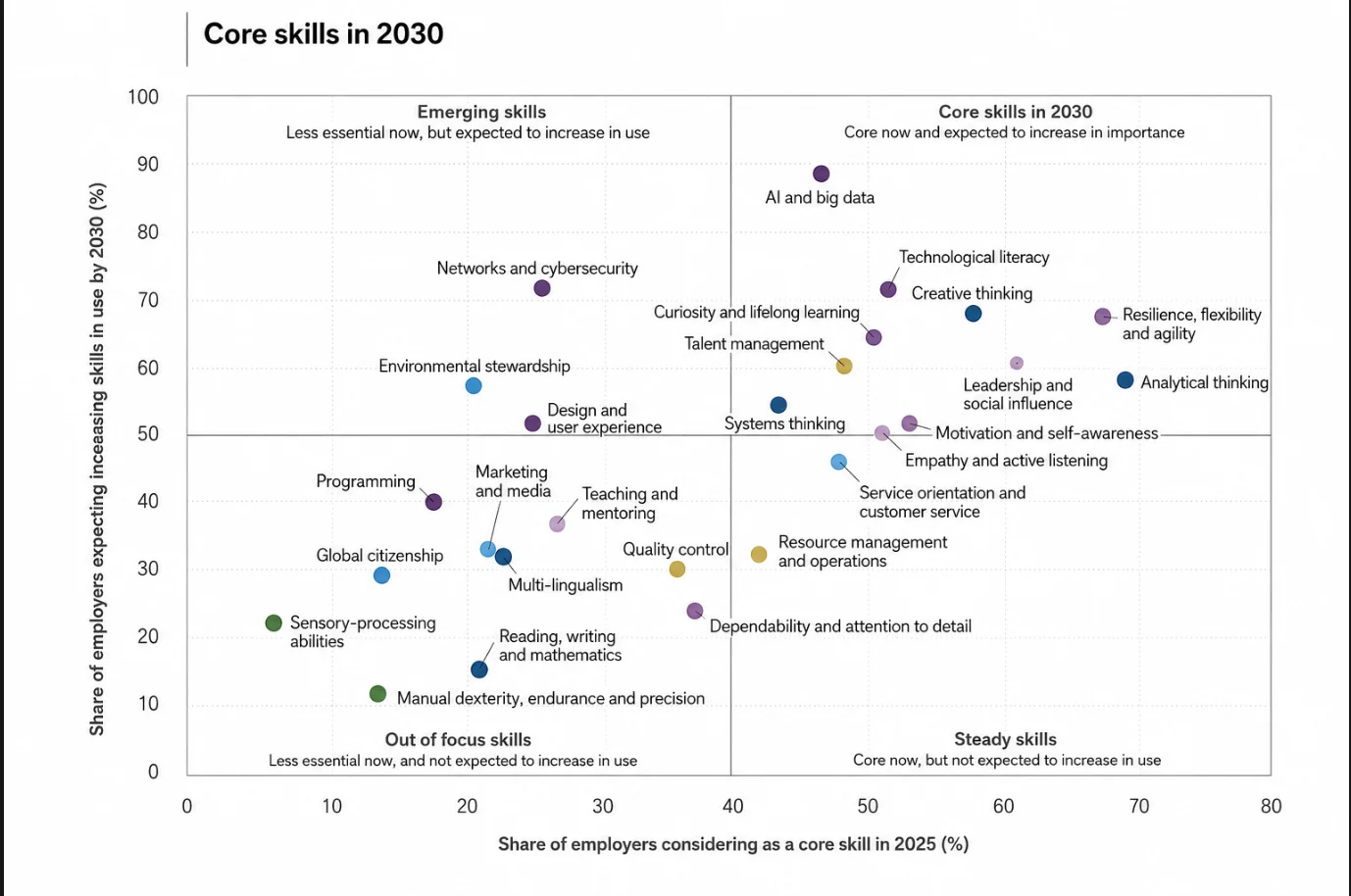
According to the World Economic Forum's Future of Jobs Report 2025, approximately 39% of workers' current core skills will change or become obsolete by 2030. During this process, 170 million new jobs or roles are expected to emerge as a result of technological advancements, the green transition, economic uncertainties and fluctuations, and demographic shifts, while 92 million existing jobs are expected to be eliminated.
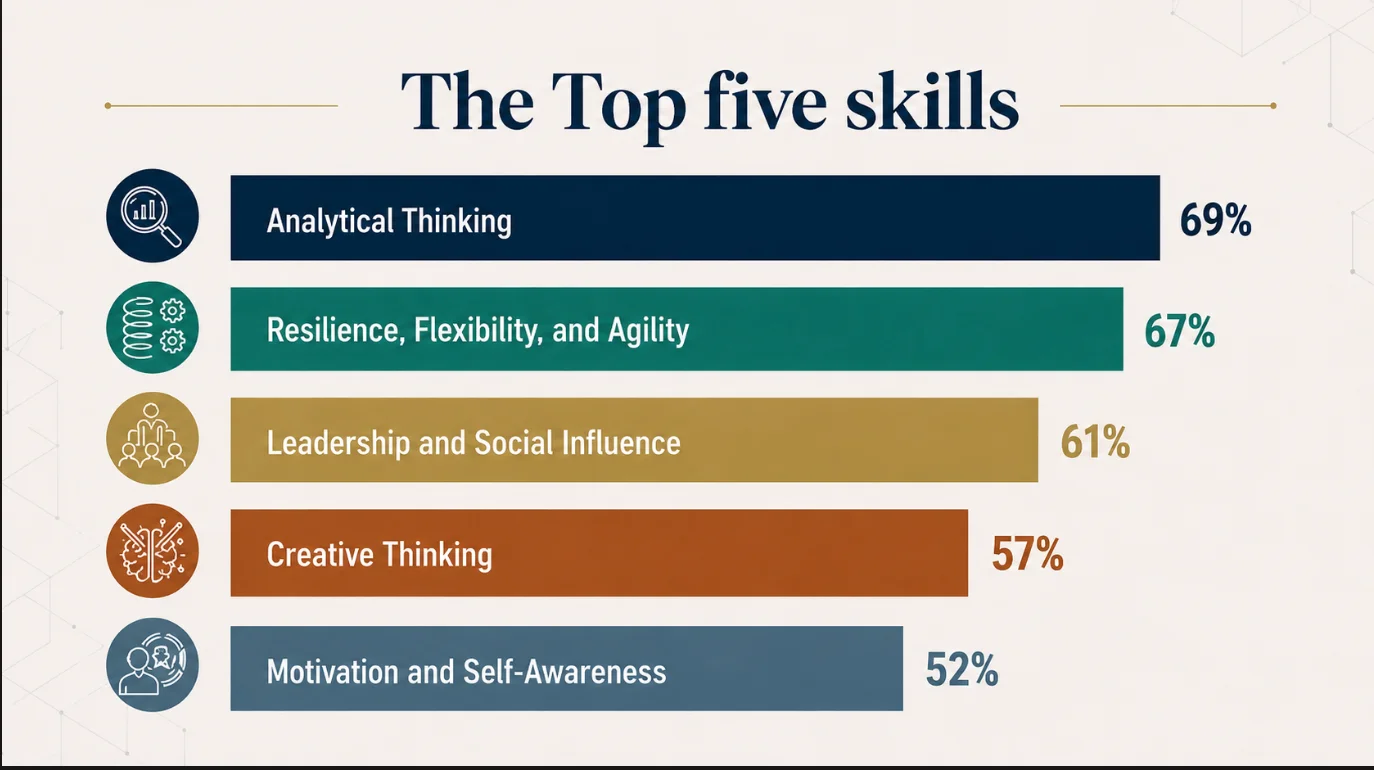
When we narrow our scope to the "Core Skills 2025" chart, we can clearly see that not only technical skills stand out, but also the group of skills that I would like to call "mental skills" come to the forefront. In fact, it is evident that these skills will become more important than technical skills. Analytical thinking, identified by 69% of employers as a core skill, ranks first. It is followed by resilience, flexibility, and agility at 67%; leadership and social influence at 61%; creative thinking at 57%; and motivation and self-awareness at 52%.
Furthermore, the top five core skills of 2025 stand out as critical competencies not only for today but also for the future. When examining projections for 2030, it is clear that these skills will maintain their importance.
This picture reveals a professional profile that can understand complex problems, adapt to conditions of uncertainty, influence others, develop solutions, and manage one's own emotions and behaviors.
This professional profile we have defined has cognitive and behavioral foundations directly associated with an entrepreneurial mindset.
Yapay zekâ geliştikçe ve rutin, bilişsel ve teknik görevleri yerine getirme kapasitesi arttıkça bu fark daha da belirginleşmekte ve söz konusu becerilerin önemi daha açık hâle gelmektedir. Dünya Ekonomik Forumu'nun (WEF) New Economy Skills: Unlocking the Human Advantage 2025 raporuna göre, yaratıcılık, liderlik ve kişilerarası muhakeme gibi insan merkezli karmaşık yetkinliklerin dönüşüme uğrama potansiyeli (%13), birçok rutin faaliyete kıyasla oldukça düşüktür. Başka bir ifadeyle, insan muhakemesi gelecekte iş süreçlerinin en kritik unsurlarından biri olmaya devam edecektir.
Kurucu Unvanı, Kurucu Zihniyetini Garanti Etmez
İnsan faktörü devreye girdiğinde unvanlar yanıltıcı olabilir.
Bir kişi şirket kurmuş, yatırımcılara sunum yapmış, yatırım almış ve "girişimci" unvanını kazanmış olabilir. Ancak buna rağmen, insanlardan gelen geri bildirimlere rağmen değişime direnebilir; geliştirdiği ilk fikre öylesine bağlanabilir ki, veriler aksini gösterse bile yön değiştirmeyi reddedebilir. Kısacası, sahiplik ya da başka bir ifadeyle "unvan", analitik düşünmeyi, uyum sağlayabilmeyi, yaratıcılığı veya öz farkındalığı garanti etmez.
Tam da bu noktada kurucu kimliği (founder identity) ile girişimci zihniyeti (entrepreneurial mindset) arasındaki ayrımı yapmak gerekir.
Kurucu kimliği, bir kişinin kendisini kurduğu şirket üzerinden ne ölçüde tanımladığını ifade eder. Bu kimlik, kişiye motivasyon, yön ve kararlılık kazandırabilir. Ancak aynı zamanda, kurucunun kişiliği girişiminden ayrılmaz hâle geldiğinde onu sınırlayabilir, hatta adeta içine çekebilir.
In this situation, feedback ceases to be useful information for the founder and begins to be perceived as a threat. Constructive criticism is interpreted as personal attacks rather than viewed as honest feedback. Over time, the need to make changes to the business model stops being a strategic decision; it begins to feel like a situation that entails compromising one's own identity.
Therefore, a person may hold the title of entrepreneur, but they may not possess an entrepreneurial mindset. Simply put, an entrepreneurial way of thinking is not a badge or title earned by starting a company. An entrepreneurial mindset is about how we respond to uncertainties, evidence, criticism, and change.
The Cost of Falling in Love with an Idea
Developing something new requires self-confidence, determination, and a strong will capable of overcoming the various obstacles encountered along the way. However, the real problem emerges when this self-confidence gradually turns into an unhealthy attachment or dependency.
When founders strongly identify their companies with their own identities, they begin to evaluate new information that comes their way either as elements that confirm their own thinking or as factors that threaten their position. As a result, while encouraging feedback is gladly welcomed, valuable, honest, and constructive criticism is often disregarded.
Accordingly, commitment to the idea can strengthen disproportionately. Founders may continue to pour more time, energy, and investment into a venture that is now clearly failing, simply because they believe they have already spent too much effort and resources to turn back.
The following thought patterns typically underlie this behavior:
- Founders may use their past investments as a justification to keep financing the venture, despite the reality of sunk costs.
- Pivoting is often viewed as a sign of weak vision or failure, rather than as a smart strategic adjustment.
- New information tends to be interpreted in ways that support the initial decision, rather than being used to assess the situation impartially.
It is precisely at this point that the difference between resilience and rigidity emerges.
Resilience is the ability to recover after failures and move forward again more strongly in light of the new information gained. Rigidity, in contrast, is repeatedly making the same decisions and expecting different, better outcomes.
A pivot does not always mean weakness or failure. On the contrary, when executed based on meaningful and reliable data, it becomes one of the strongest indicators of entrepreneurial discipline. This process requires founders to separate their identity from the solutions they develop and to realize that preserving the initial idea is not the same as preserving the value they aim to create.
Thinking Like an Entrepreneur Without Starting a Company
Intrapreneurship refers to applying an entrepreneurial mindset within an existing organization. This approach allows employees to develop innovation without assuming the risks of owning a business. Intrapreneurs take initiative to solve problems, leverage existing resources, and develop new solutions within the opportunities offered by corporate structures.
Unlike independent entrepreneurs, intrapreneurs do not have to start from scratch or risk their own capital. Instead, they leverage the technological infrastructure, financial resources, networks, and market position of the organization they work for.
This may make intrapreneurship seem easier compared to traditional entrepreneurship. In reality, however, it carries its own unique challenges. While a startup founder can start from a blank page, an intrapreneur must navigate within existing structures such as legacy systems, internal politics, and complex approval mechanisms. These structures also define the boundaries of what they can achieve.
Whether it is an engineer redesigning an inefficient process, a researcher turning scientific knowledge into practical application, or an employee automating repetitive tasks, these individuals demonstrate an entrepreneurial spirit without holding the title of "founder."
In the end, what brings them together is not a job title. Their true common trait is their refusal to be a passive user of a flawed system. They identify problems, take responsibility for solutions, and create value within the constraints of their environment.
Ownership Cannot Be Demanded
Although many organizations claim to value initiative, creativity, and ownership, in practice they often punish failure and overlook the authority employees need to bring their ideas to life.
Ownership does not mean transferring risks and responsibilities to employees while the organization retains the decision-making power.
When employees identify problems and continuously encounter meaningless or unproductive responses, it becomes inevitable over time that an approach describable as a renter mindset develops.
After a while, the employee stops putting in extra effort. They either learn to live with the problem or choose to leave the organization.
This behavior cannot be characterized as laziness or a lack of ambition. On the contrary, it is a natural reaction to a work environment where taking initiative creates risk but offers no reward in return.
If a company or institution expects its employees to take initiative and think like entrepreneurs, it must also provide them with the following:
- Decision-making authority
- Access to resources
- Psychological safety
What is needed is not a manager who tells employees what to do, but a leader who works alongside the team and leads them.
Because true leaders can:
- Clarify direction.
- Remove obstacles.
- Create an environment where everyone can confidently share their ideas.
Unless these elements are provided, it is not possible for an ownership culture to be adopted and sustainably implemented within an organization.
A Profession for Some, a Mindset for Many
An entrepreneur is someone who can think analytically under uncertainty, bounce back after failures, and let go of an idea they have worked on for a long time when necessary. They can bring people together around a shared vision, mobilize limited—or even nonexistent at the outset—resources, and turn criticism into actionable insights.
What sets entrepreneurs apart is their ability to recognize cognitive biases, manage their egos, and use sound judgment skills to make rational decisions.
Some develop these skills by founding their own ventures, while others demonstrate them within the organizations they work for. These individuals may not carry the title of "entrepreneur," but they exhibit the same competence in noticing overlooked problems, questioning established assumptions, and taking responsibility for creating value.
Perhaps for some, it is a profession, but for many more, it is a mindset.
References
- WEF - Future of Jobs Report 2025
- WEF - New Economy Skills: Unlocking the Human Advantage 2025
- From Critique to Catalyst: How Academic Entrepreneurs Transform Negative Feedback into Pivots and Performance
- The Pivot: How Founders Respond to Feedback Through Idea and Identity Work
- The Escalation of Commitment to a Failing Course of Action: Toward Theoretical Progress
- Intrapreneurship, explained | MIT Sloan
- Multi-Level Success Factors Empowering Intrapreneurship in New S-Curve Industries: Qualitative Evidence in Thailand
- Beyond Hubris: How Highly Confident Entrepreneurs Rebound to Venture Again


